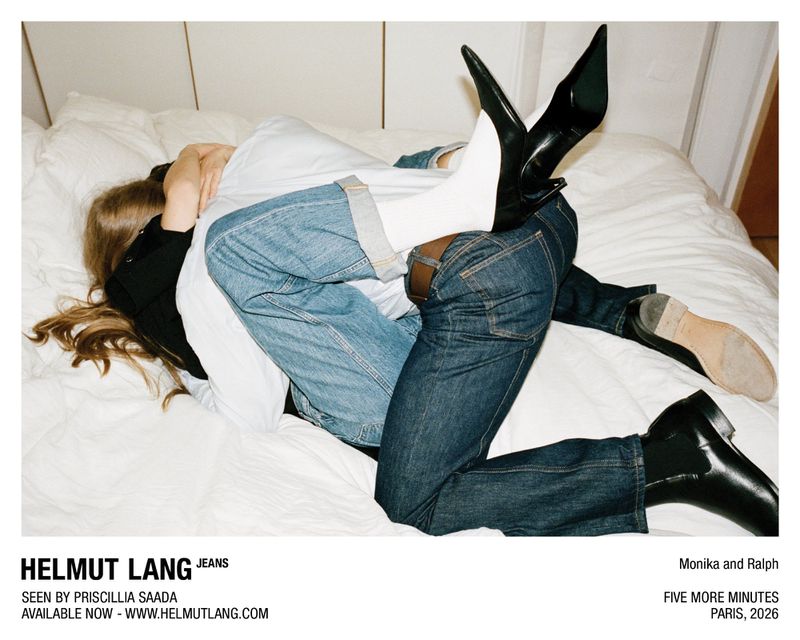
The archive has been speaking loudly of late. With Vienna's Helmut Lang retrospective drawing record attention and retrospectives from AnOther to Wallpaper* revisiting the designer's seismic influence on how we dress, the house finds itself at a curious inflection point—revered as history, yet tasked with writing its next chapter. Into this tension arrives Helmut Lang Jeans Seen by Chloe Jones, a capsule that borrows the most American of garments—the Western jean—and submits it to the brand's signature discipline. It is denim as reduction, denim as argument.
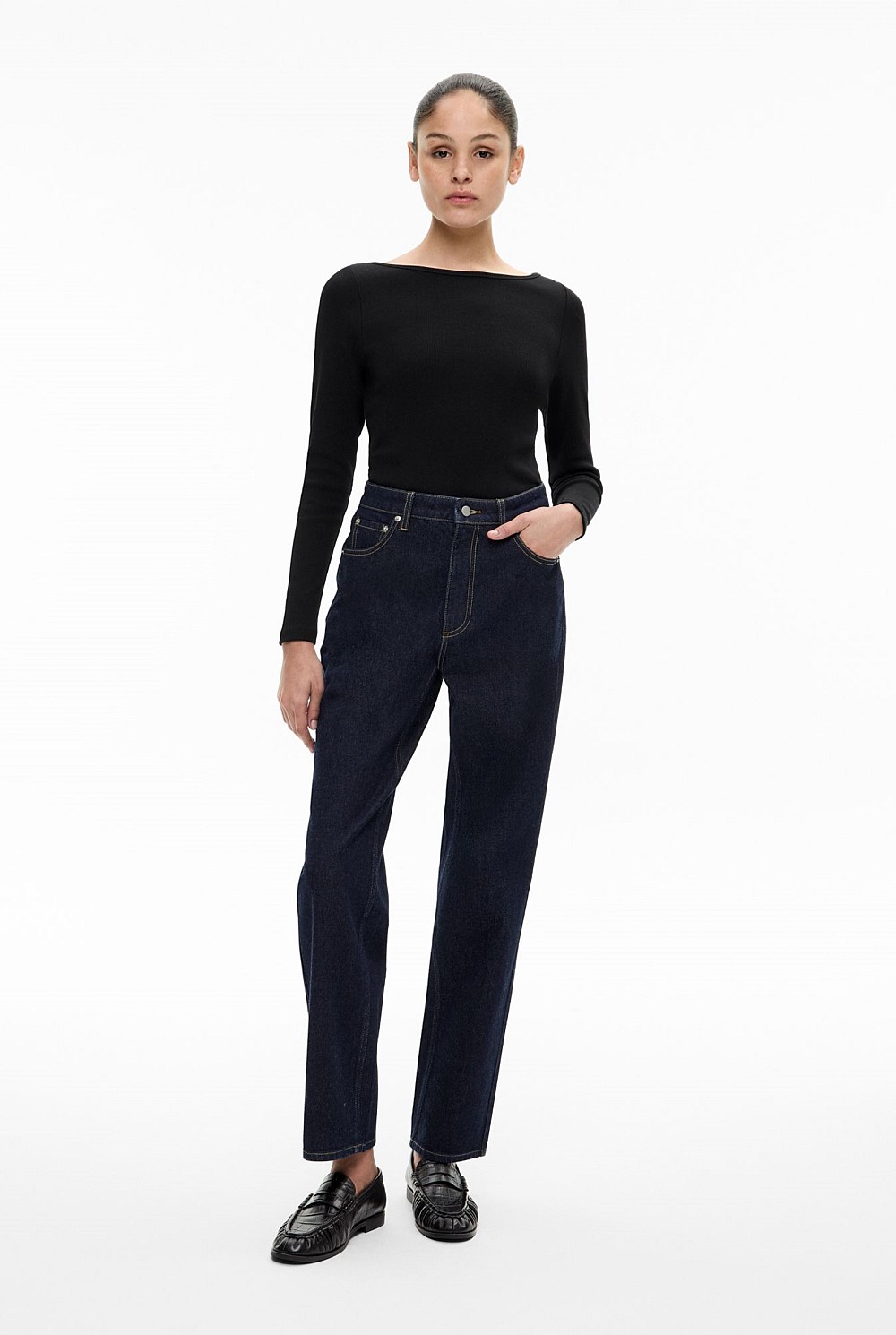
The premise is a dialogue rather than a directive. Jones, the British stylist whose eye for subcultural grit has made her a defining voice of the moment, was invited to reinterpret the house's denim vocabulary through the lens of Western life. What results is not costume, nor is it pastiche. The rigid, high-rise silhouettes carry the faintest echo of ranch-hand utility—a cinched waist, a straight, unapologetic leg, a waistband cut clean—before the references are quietly sanded away.
The Cut as Statement
This is the Helmut Lang method distilled: take a loaded signifier, strip it of ornament, and let the cut do the talking. The washes follow suit—raw indigo, faded stone, a near-black rinse—each chosen for how it ages rather than how it photographs. The subtle Western yoke appears more as memory than motif, a ghost of the frontier rendered in clean lines and considered proportion. The result is a garment that reads as minimalism to one eye and Americana to another—precisely the ambiguity the house has always cultivated.
Cloth That Remembers
Materials matter here with unusual insistence. The denim is substantial, dry, and deliberately unforgiving at first wear, the kind of cloth that records the body's movements over months and years. It is a quiet rebuke to the stretch-denim consensus, a return to the idea that a jean should be broken in, not simply bought. Hardware is minimal and functional; stitching is restrained. Every element serves the whole, and nothing announces itself louder than the silhouette it supports.
A Narrative Heading West
Context sharpens the point. The house's current denim campaigns have been framed as love stories, positioning the jean as an object of intimacy and longevity rather than trend. The Seen by Chloe Jones chapter extends that narrative westward, toward the mythologies of open land and self-invention that have always shadowed American dress. That the house's own history—its 1990s reign, its anticipation of the minimal-yet-subversive register that films like Trainspotting would later canonize—remains freshly excavated only deepens the resonance. This is a brand aware of its inheritance, choosing to extend it rather than merely curate it.
For the Deliberate Dresser
Who is this for? Not the collector of vintage archive pieces, though they will understand it. It is for the wearer who wants a jean with architectural intent—something that holds a line, resists ease, and rewards patience. It suits the person who treats getting dressed as an editorial act, who understands that a clean high waist and an honest leg constitute a complete statement. It is unisex in spirit, exacting in fit, and indifferent to the season's prevailing noise.
Why it matters now is simple: denim has become the industry's most overworked surface, saturated with washes, distress, and novelty. Helmut Lang Jeans Seen by Chloe Jones proposes the opposite—denim as restraint, as a long conversation between cloth and body, as the most minimal thing in the room and therefore the most confident. In a moment when the archive is being celebrated everywhere, this capsule demonstrates that the house's real legacy is not a look to be revisited but a discipline to be practiced. The Western jean, stripped to its essentials, becomes something rarer than a trend: a position.